
THE WHITE PAPER · DIAGRAMS · EXPLANATIONS
Fleks in Theory
From a purchase conversation to a FleksScene
The White Paper begins with an existing schema for organizations, people, interactions, tasks, and purchase opportunities. A business conversation supplies evidence about those objects and their relationships.
Interpretation proposes a connected account: who participated, which organization and opportunity were discussed, what tasks were identified, and who owns them. A FleksScene presents that connected context for review. Source evidence helps the reviewer resolve ambiguity and decide what to accept.
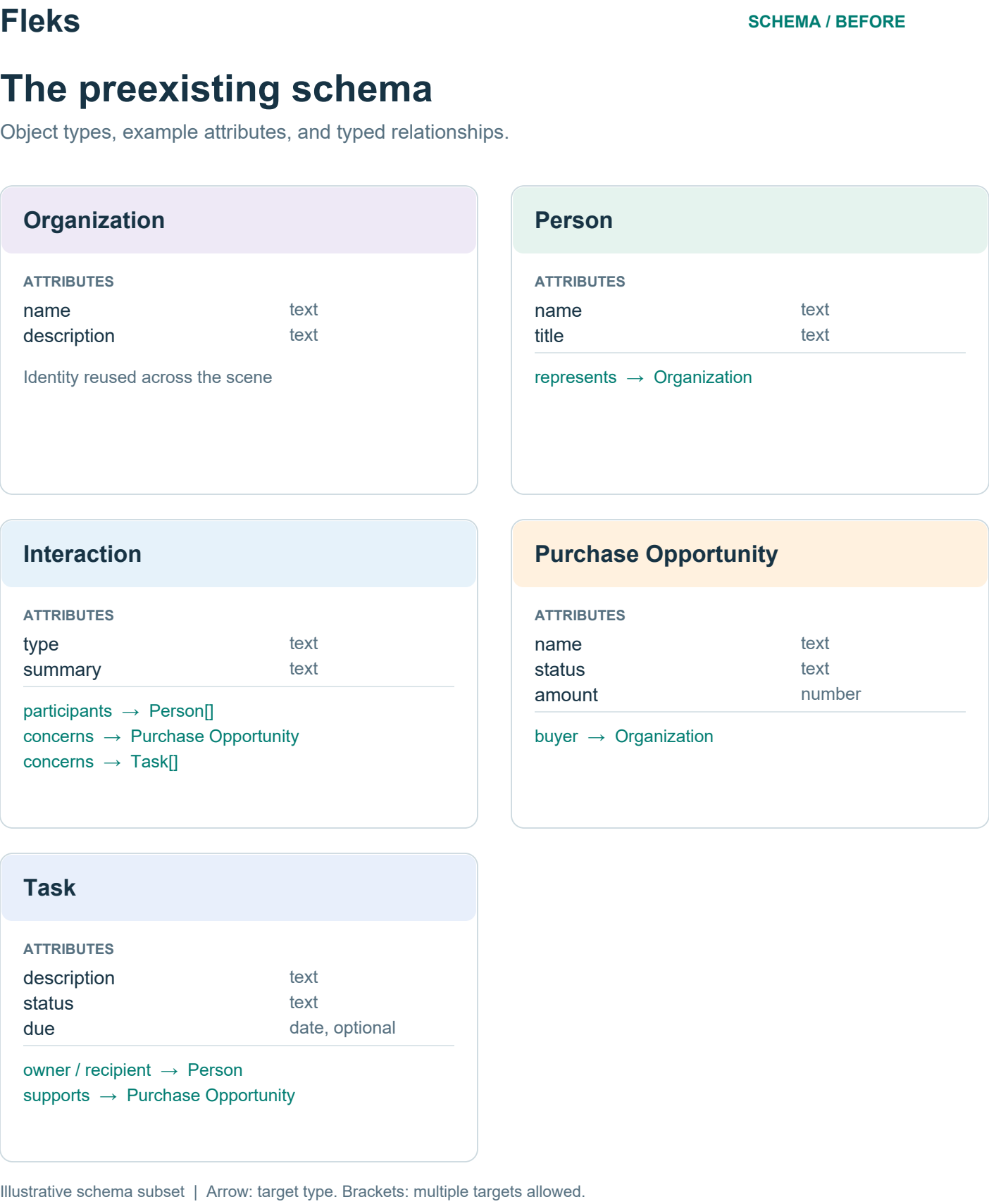
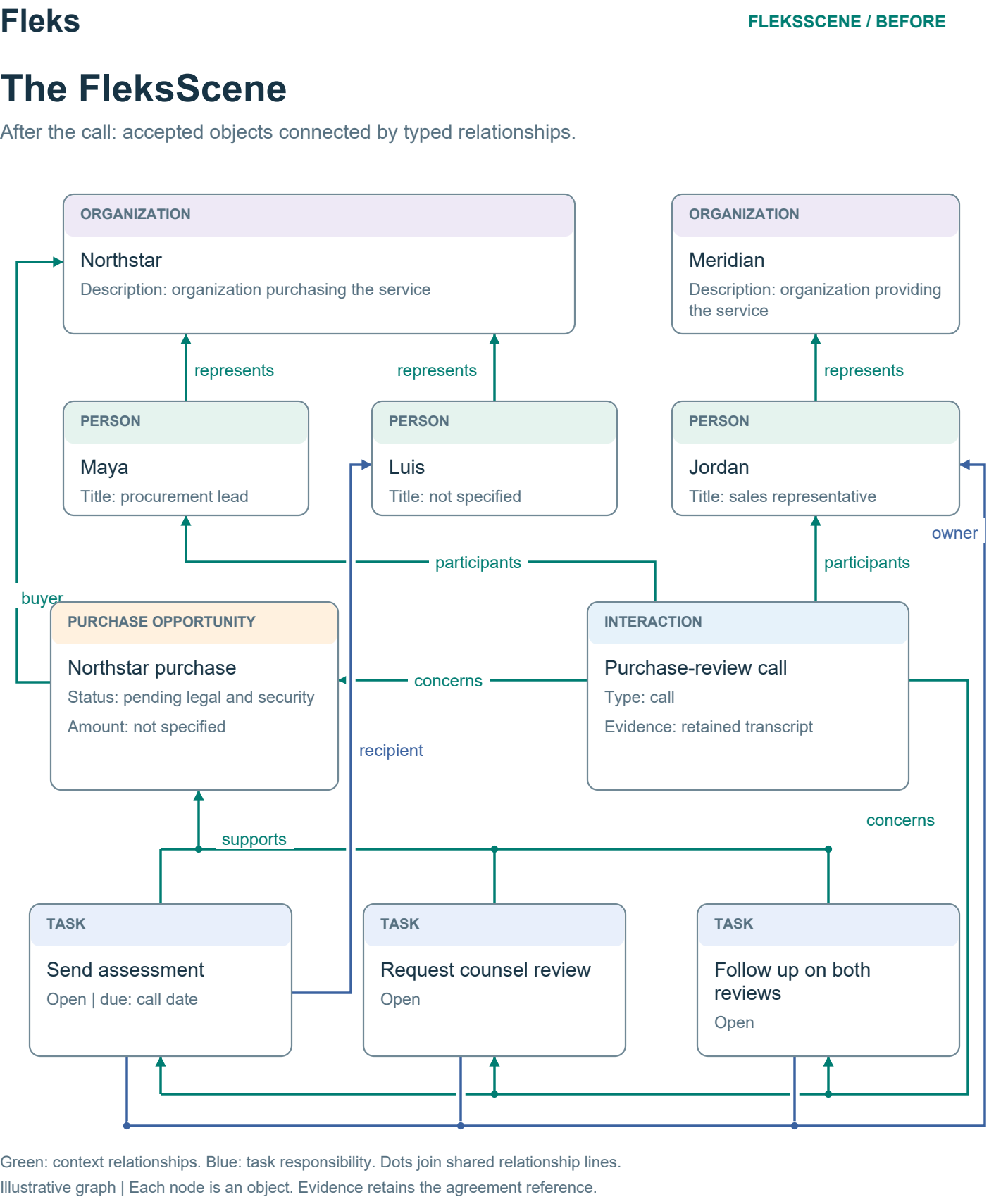
When the work reveals a missing concept
Repeated references to contracts can suggest that the data model needs a contract object. Interpretation can surface the pattern and propose the addition. An authorized reviewer then decides whether to adopt the schema change.
Once adopted, that definition makes contract facts and relationships representable. A contract can carry a signature date and an attached document. Those business facts still need acceptance. Earlier interactions can then be analyzed for contract references, producing new proposals with their original evidence preserved.
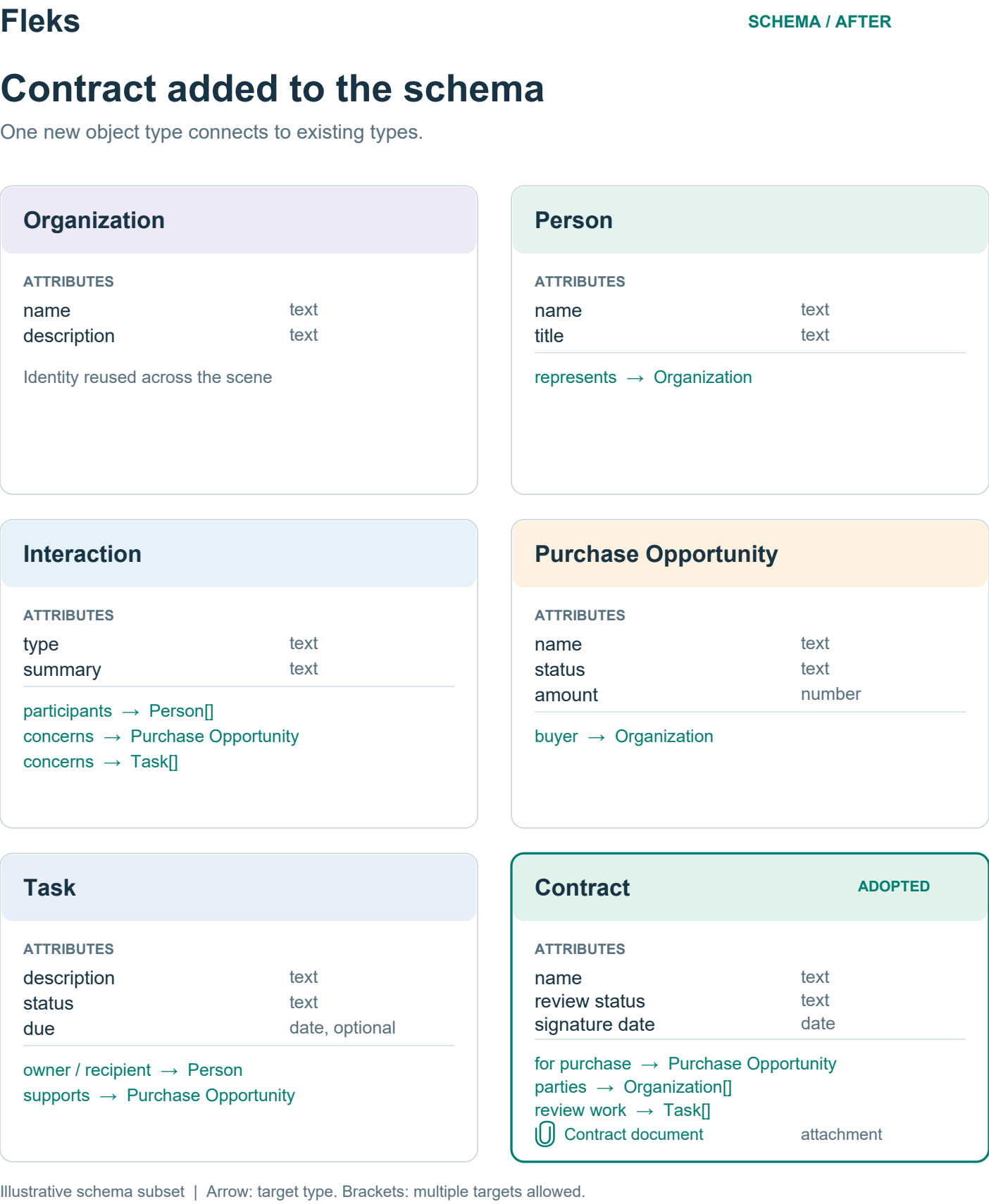
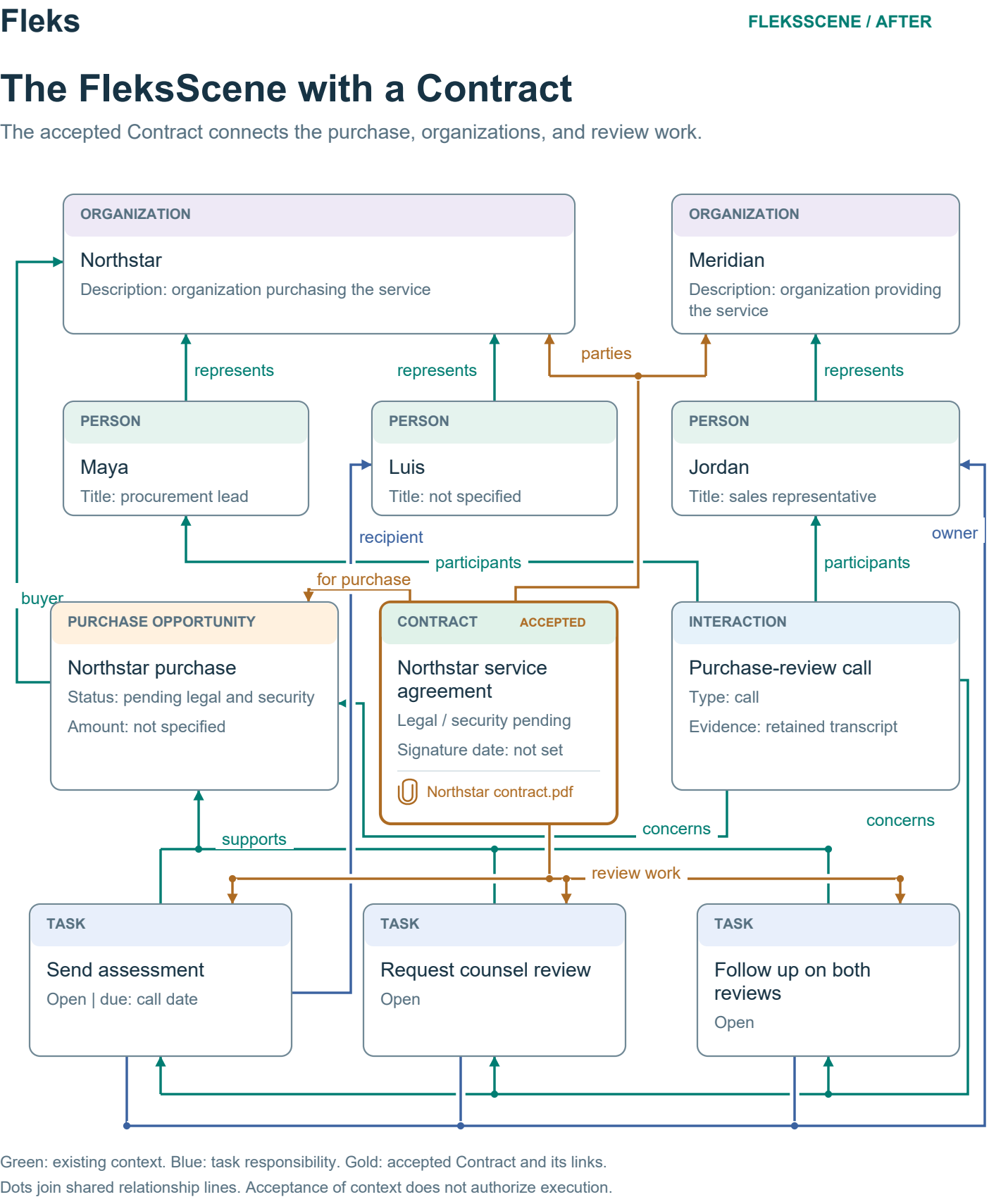
From the White Paper: Section 5: the first practical application.
What the POC establishes—and what comes next
DEMONSTRATED IN CONTROLLED JOURNEYS
A working foundation
- Semantic capture through schema across different business concepts.
- Governed changes to existing definitions and adoption of connected types.
- Explicit review and acceptance of business records.
- Persistence of accepted records, relationships, schema references, and unfinished work across restart.
TO DEVELOP AND QUALIFY
The broader knowledge plane
- Independent operation across applications and agents.
- Production integrations and broader operational reliability.
- Systematic learning from immutable history.
- Risk-based policy acceptance and coordinated external action.
From the White Paper: Appendix D: POC proof points.